
The Moment You Notice Something's Off
It usually starts small. The opener makes a new sound on the way up, a strained hum instead of its usual smooth hum. Or the door seems to hesitate halfway, like it's thinking about whether to keep going. Maybe you've started noticing the remote takes two tries some mornings. You tell yourself it's nothing, until the day the door won't fully close and reverses back open on its own, or you pull the emergency release cord to lift it by hand and it feels like it weighs twice what it used to.
That heaviness is the tell. A properly balanced garage door should lift with one hand and stay wherever you leave it, hovering at waist height or fully open, without drifting down. If it doesn't, the springs are no longer doing their job, and the opener has been quietly picking up the slack for weeks, maybe months.
What an Unbalanced Door Does to the Opener
Garage door openers are built to move the door, not lift its weight. The springs are supposed to counterbalance the door so the opener only needs to guide it along the track. When springs weaken, stretch, or lose tension, the opener's motor and drive gear take on load they were never designed for.
Over time this shows up as:
- A motor that runs louder or hotter than usual
- The door reversing partway through closing, because the opener's force sensors think it's hit an obstruction
- Faster wear on the drive belt or chain
- Burned-out circuit boards or stripped gears, which are a far more expensive repair than a spring
Fall is a common time for this to surface locally. After a long dry season, dust and wildfire smoke residue settle into tracks and rollers, adding friction right as temperature swings between warm afternoons and cool nights cause metal springs to contract and expand. A door that was marginally balanced in August can tip into clearly unbalanced by the time the first rains start.
Tools You'll Need
- A step stool, if your release cord is out of easy reach
- Work gloves
- A flashlight, for checking springs and the track
- Nothing else — this test doesn't require tools, just a clear view of the door and a few minutes
How to Test the Balance Yourself
- Close the door completely using the wall switch or remote, so you're starting from a known position.
- Disconnect the opener by pulling the red emergency release cord, which is almost always hanging from the trolley on the center rail. This disengages the door from the motor so you're testing the springs alone.
- Lift the door by hand slowly, about halfway up.
- Let go and watch what happens. A balanced door will stay in place or drift down only an inch or two. If it falls shut or shoots upward on its own, the springs are out of balance.
- Repeat near the top of the door's travel. Some doors are balanced in the middle but not at full extension, which points to a specific spring or cable issue rather than general wear.
- Reconnect the opener by pulling the release cord again and running the door through a normal open-close cycle to confirm the trolley has re-engaged.
What You Can Safely Check Yourself — and What You Can't
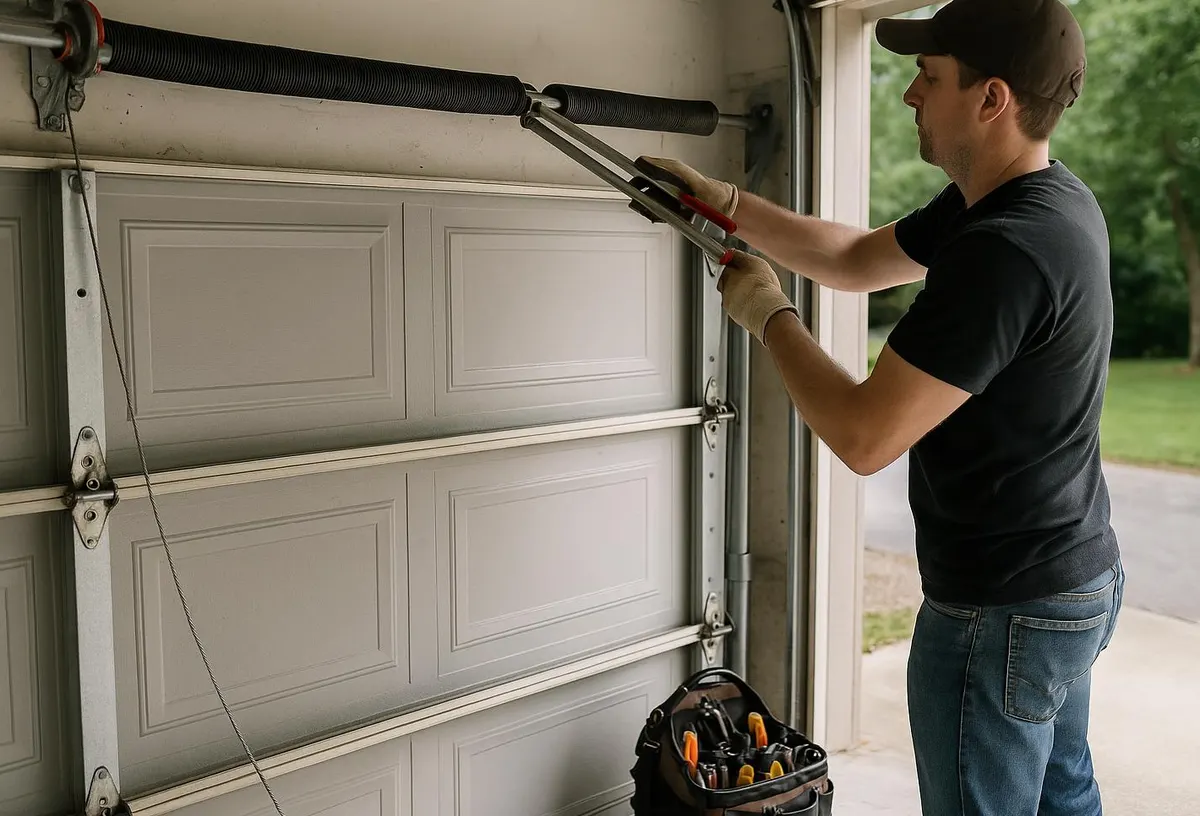
Testing balance, listening for new noises, and doing a visual check of the springs for visible gaps, rust, or stretching are all reasonable for a homeowner. What is not a DIY job is adjusting or replacing the springs themselves. Garage door springs, especially torsion springs mounted above the door, are wound under extreme tension. Loosening or removing one without the right winding bars and experience has caused serious injuries, including broken fingers and worse. If your test shows an imbalance, the fix is a job for a technician, not a weekend project.
When to Call Santa Rosa Garage Door
If your door fails the balance test, or the opener has started straining, reversing, or making grinding noises, it's time to get a technician out before a gear or circuit board gives out. Santa Rosa Garage Door handles spring replacement safely with the right tools and correctly rated springs for your door's weight, and we check garage door opener repair needs at the same visit so you're not paying for a motor replacement that a spring adjustment would have prevented. We serve homeowners throughout Santa Rosa, Rohnert Park, Sebastopol, Windsor, Healdsburg, Cotati, Petaluma, and Sonoma.
If your garage door feels heavy, loud, or unpredictable, call Santa Rosa Garage Door today and get it balanced before winter rain and daily use make it worse.